Project lead
The County of Maui Department of ʻŌiwi Resources is currently working with Group 70 International, Inc. (G70) to develop the Lahaina Royal Complex Master Plan. The project scope includes hydrology and water policy; wildfire resiliency and risk planning; biological and ecological assessment; cultural landscape architecture; community engagement protocol; transportation circulation planning; topographical survey; cultural and archaeological studies; soils and geotechnical studies; and boundary mapping.
Provide your comments on the draft Action Plan online, by mail or in-person at the Lahaina Resource Center or Kāko‘o Maui Relief & Aid Services Center.

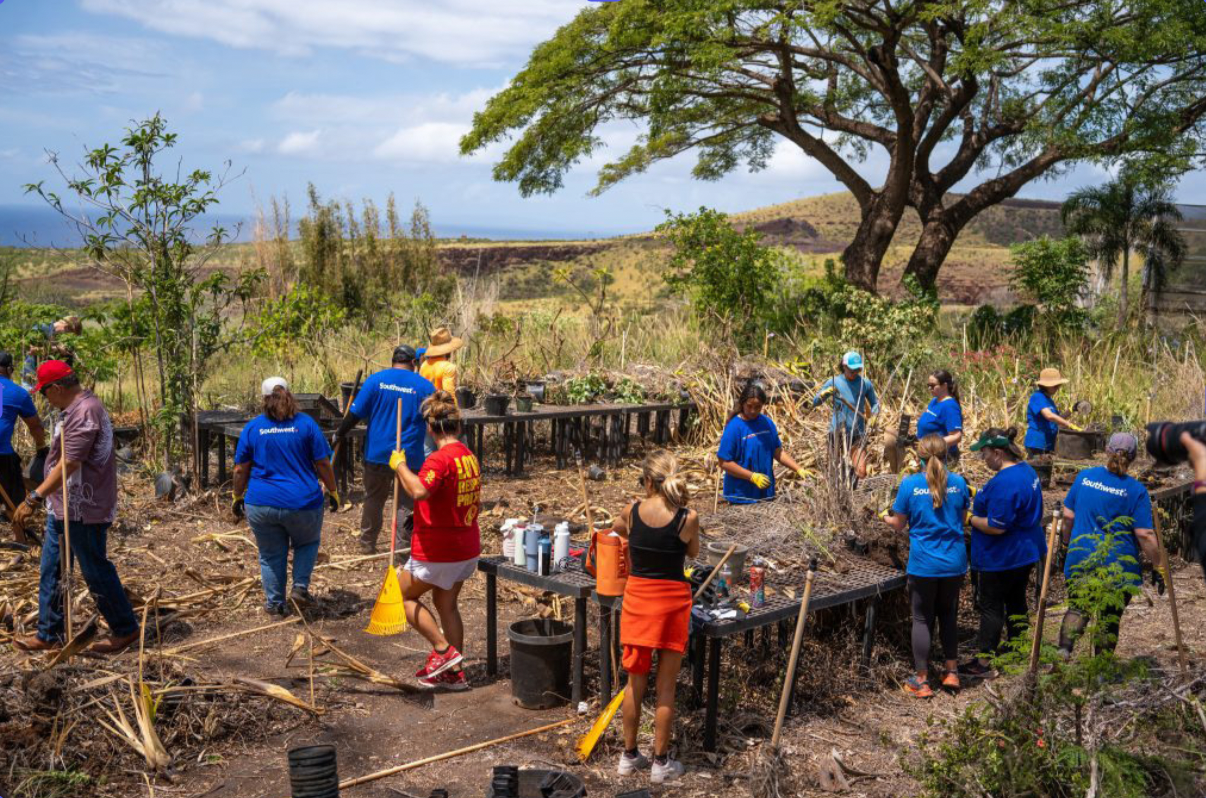
Volunteers clean up the nursery, make ready for new plants at Lahainaluna High School. PC: JD Pells / Maui Now
Historically, Native Hawaiians cultivated the land to feed and sustain generations, and Lahaina was particularly favored by ali’i for its abundant food and ideal climate. Today, Hawai’i’s communities are extremely food insecure and vulnerable to future disasters and supply chain issues. This places economic strain on residents and business owners due to high food costs. After the fires, community groups came together to form the Maui Emergency Feeding Task Force to address community food shortages and needs. Emergency feeding needs continue and future initiatives are needed for food resilience and for long-term self-sufficient food security. The Lahaina community and government agencies have expressed interest in reinvigorating sustainable agricultural practices to reshape Maui’s economy, generate jobs and feed the community.
Building off the County of Maui Department of Agriculture 2024-2028 Strategic Plan, this recovery project involves the creation of a plan to develop and prioritize agriculture initiatives for Lahaina moku’s agriculture, farms, food systems, and ecosystems.
Goals of the plan include:
Key example efforts include:
This project is related to revegetating and reforesting Lahaina, as efforts to plant food crops and fruit trees will contribute to long-term local community food security. Challenges include: lack of funding; the need for collaborative strategies with community, private landowners, businesses, and government agencies; political, community, and tourist industry buy-in; conflict between tourism and agriculture as an alternative economic industry; lack of water supply and infrastructure in regions surrounding Lahaina; and the current ecological landscape and climate of Lahaina.
TBD
County Department of Agriculture